01 / REVIEW
Choose a stable key
Assign an internal identifier that does not depend only on a storage location or a supplier’s filename. Preserve the supplier lot as a separate field. A moved bundle should retain its identity even when its warehouse location changes.
02 / REVIEW
Connect the physical label
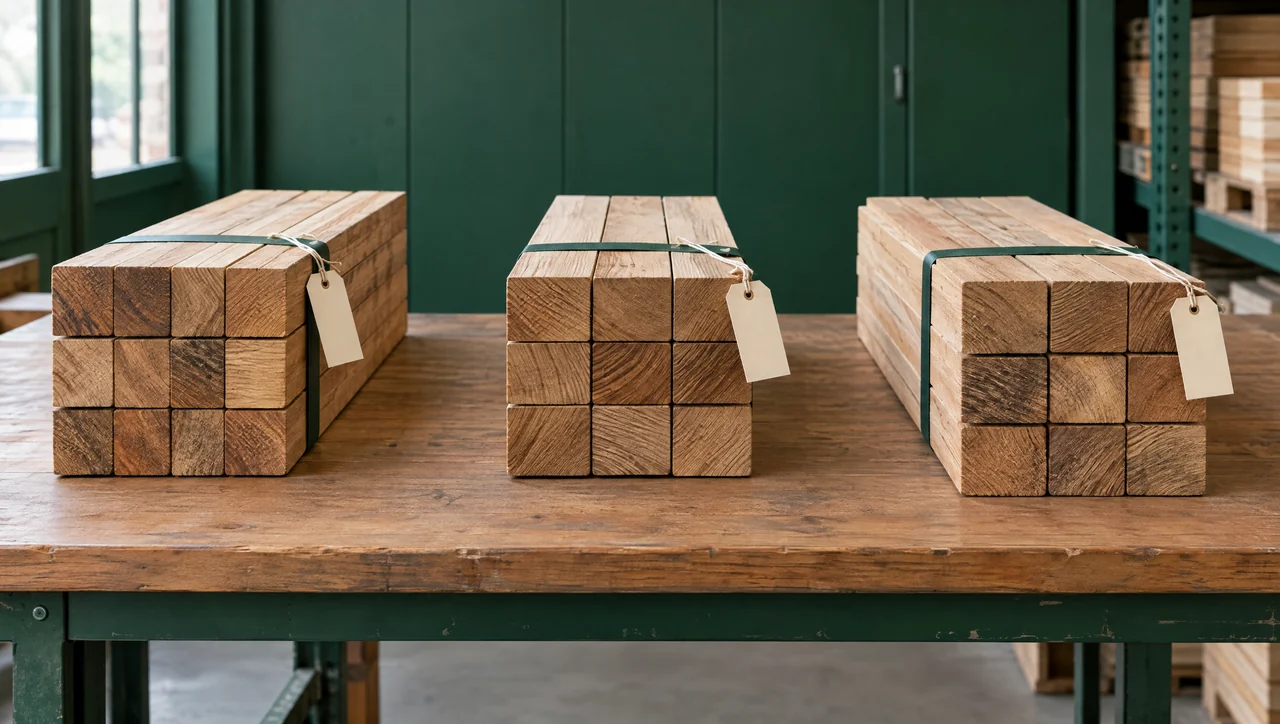
Record how the identifier is attached to or associated with the material. Photograph the label and surrounding bundle where useful. A database entry without a physical relationship can become detached from the goods it describes.
03 / REVIEW
Preserve parentage
When material is split, record child identifiers and quantities against the parent. Do not reuse the same identifier for a different batch merely because the product description matches.
A lot number is a link, not a claim
A useful lot identifier connects physical material to a defined set of records. It does not, by itself, establish species, harvest origin, legality or certification. Those claims need their own evidence. The identifier makes it possible to find that evidence and determine which material it covers.
Choose an identifier that remains usable when a bundle is moved, opened or divided. A warehouse location is useful operational information, but it is a poor permanent identity: the lumber can move while the location name remains. Similarly, a purchase-order number may cover several deliveries and several distinct material lots.
Keep supplier and receiving identities together
Preserve the supplier's lot or bundle reference exactly as supplied. If your organization assigns its own receiving identifier, store both and explain their relationship. Do not replace the original with a new number that cannot be traced back to the delivery documents.
| Field | Fictional example | Purpose |
|---|---|---|
| Internal receiving lot | REC-026-A | Stable local reference |
| Supplier reference | Bundle BX-417 | Connection to the supplier's record |
| Delivery reference | Delivery 026, line 3 | Connection to the transaction |
| Physical labels | Two bundles, labels photographed | Connection to the material received |
| Document set | Invoice, packing list and origin statement | Identifies the records available for review |
Use a naming convention that people can reproduce without decoding a long string. Put descriptive fields in the record rather than embedding every fact in the identifier. If a species description is later corrected, the identity should not have to change merely because that description was part of the original number.
Test the record in both directions
Start at a bundle and try to find its documents. Then start at a document and try to find the covered material. If either direction fails, the record needs work. A folder of certificates with no lot relationship is not a traceable inventory, and a well-labeled bundle with no supporting documents leaves the claims unresolved.
Photograph labels before packaging is discarded. Record who received the material, when it arrived and any mismatch between the packing list and the actual shipment. Keep corrections as dated entries rather than silently replacing the original observation.
When a lot is divided, continue the relationship through split-lot records. The aim is a chain that survives ordinary warehouse work. An identifier that works only while the original bundle remains unopened is unlikely to be useful by the time material reaches a project.
A lot-record scenario
Fictional example: lot WP-100 is split into WP-100-A and WP-100-B. Both child records retain WP-100 and the original supplier reference. The identifiers document an internal relationship, not independently verified forest origin.
Use the result
Keep the completed review with the relevant project record. Assign unresolved items before relying on a conclusion. If the material, condition or document changes, revisit the affected questions.
Evidence workspaceTechnical references
General background for the subject. Project worksheets and fictional situations are original review aids, not official agency forms.
APHIS: Lacey declaration guidance