Specialist reference
Connect the paperwork to the physical lot.
Keep supplier identifiers, bundle labels, transfers and supporting documents connected. Distinguish a recorded statement from a claim that has been independently verified.
Keep the material and its records connected
A useful provenance record follows identifiable lots through receipt, splitting, merging and handover. It distinguishes what a document actually establishes from what remains unconfirmed. Start with lot identity; add claims only when their evidence follows the same material.

Use identifiers that survive splitting, receiving and transfer.

Know which claim each document can and cannot support.
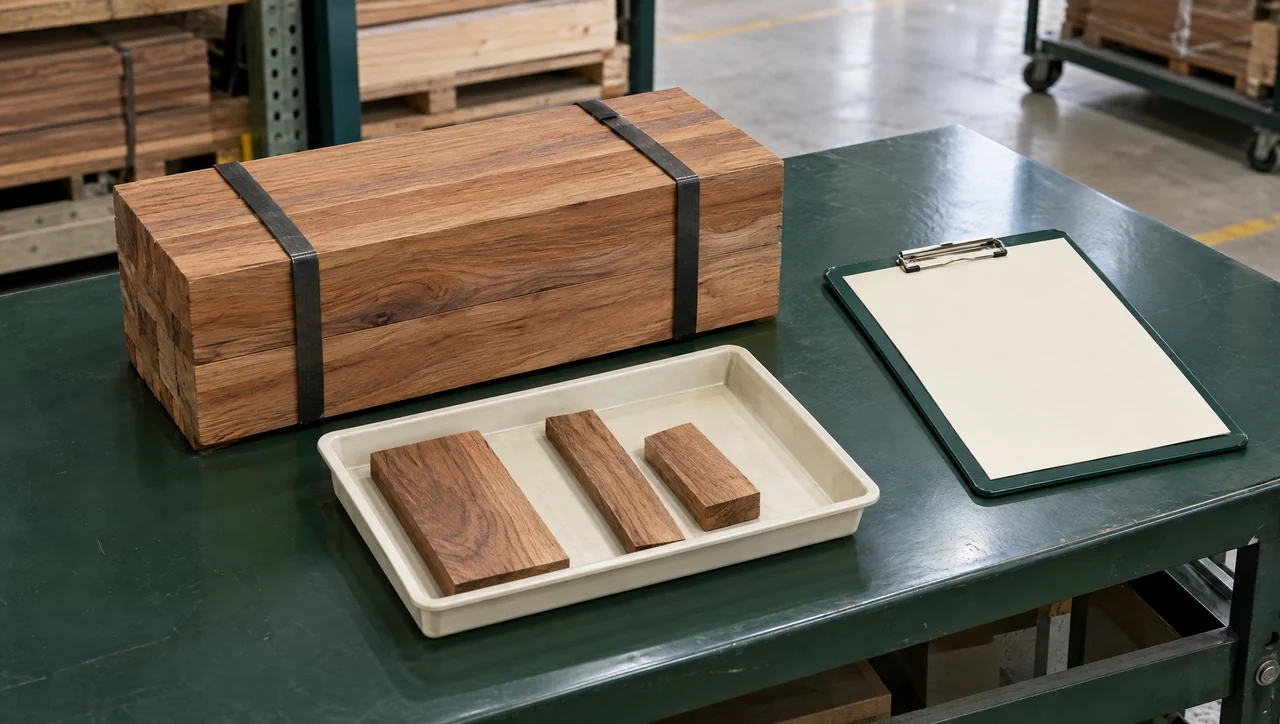
Capture identity and condition before labels are lost.
A common name is not always a precise species identifier.
Different places answer different origin questions.
Use one unit basis and retain the arithmetic trail.
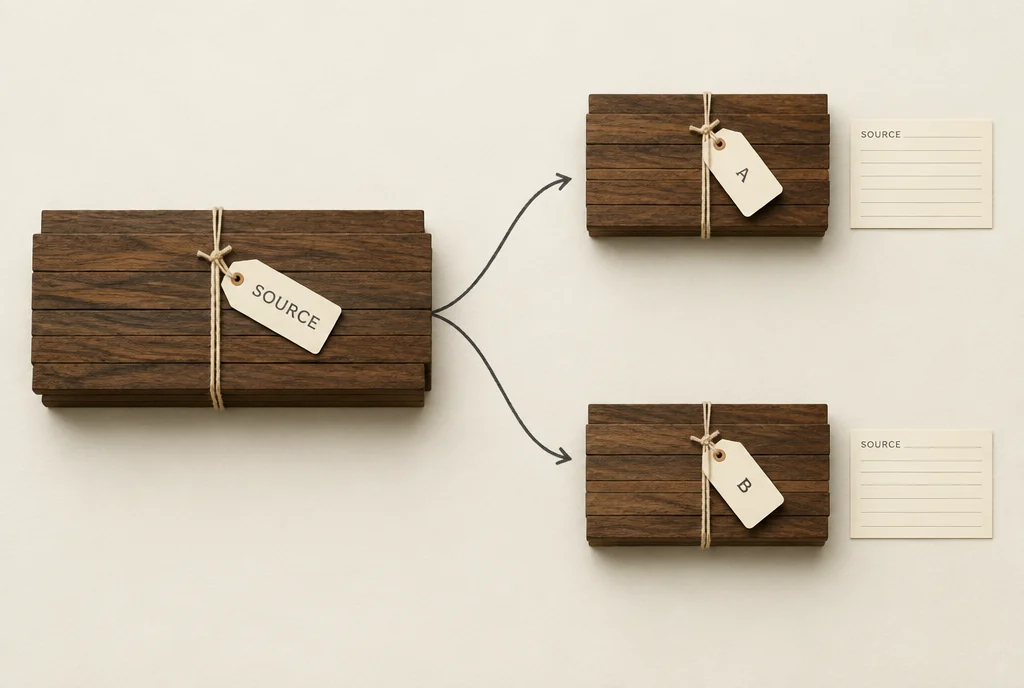
Children should retain their relationship to the parent material.
A combined storage bundle may still contain several source histories.
Ask for the missing link, not another generic brochure.
Resolve conflicts without rewriting the original evidence.
Keep documented, reviewed and independently verified information separate.
Use current official guidance for applicability and filing.
Make material history findable after people and projects change.